2026-10-27 · Mike Novak
Sorting Construction Debris for Milwaukee Dumpster Rentals
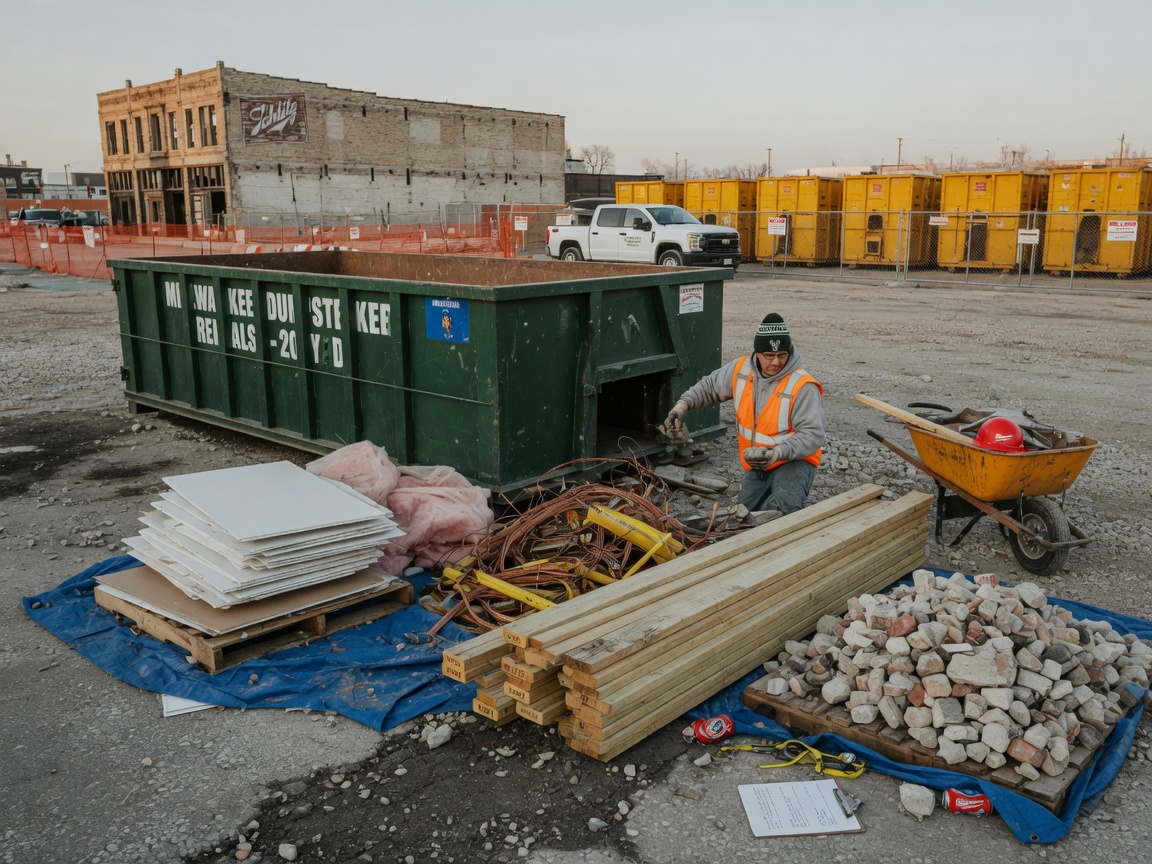
In Milwaukee, effective sorting of construction debris starts with separating wood, metal, concrete, drywall, and plastics into distinct piles before any material enters the container. This approach prevents contamination fees at the landfill and allows crews to stack heavier items at the bottom for stability during transport across the county's varied terrain.
Why Proper Sorting Matters in Milwaukee
Milwaukee's humid continental climate brings cold snowy winters that can freeze mixed loads solid, making later separation impossible once materials reach the landfill. Older housing stock in neighborhoods such as Bay View, Riverwest, and the East Side often yields plaster, lath, and single-pane glass alongside modern drywall and vinyl, so crews must isolate these items to avoid rejection at disposal sites. Proper sorting also respects weight limits on narrow streets in the Third Ward and Walker's Point, where overloaded containers risk damaging pavement or triggering city inspection stops. Homeowners in Washington Heights and Shorewood frequently handle kitchen and bath remodels that generate both recyclable metal fixtures and non-recyclable laminate, making early separation essential for cost control.
Common Construction Debris Categories
Wood from framing and trim must stay free of painted or pressure-treated pieces that require separate handling. Metal items including pipes, ductwork, and fixtures go into a dedicated pile for scrap recovery. Concrete, brick, and tile belong together because they can be crushed for aggregate reuse, while drywall and plaster need isolation to prevent gypsum dust from coating other materials. Roofing shingles and insulation form their own category due to asphalt content. Hazardous items such as lead paint chips, asbestos tiles, or fluorescent tubes must never enter a standard container and require separate pickup arrangements.
Sorting Steps for Efficient Loading
Begin by laying tarps on the driveway or yard to create clean sorting zones. Place the heaviest materials like concrete chunks at the base of each lift, followed by wood framing, then lighter drywall and insulation on top. Keep a separate bin nearby for any metal that can be pulled for recycling credit. In Wauwatosa or Glendale jobs, measure the container footprint first so sorted piles fit the exact dimensions without overhang. Work in batches of 4-6 cubic yards to avoid blocking sidewalks during winter snow removal periods.
Handling Milwaukee's Weather Challenges
Winter temperatures often drop below freezing, so crews cover sorted piles with weighted tarps to prevent snow accumulation that adds hidden weight. Spring thaws can turn soil soft in low-lying sections of the East Side, requiring plywood under the container wheels to avoid sinking. Summer humidity increases the weight of wet insulation and drywall, so materials should be kept under cover until loading day. These seasonal patterns directly affect how much usable space remains after sorting in a 20-yard or 30-yard roll-off.
Local Regulations and Placement Considerations
Milwaukee County landfill rules require loads to be sorted enough that no single material exceeds 10 percent contamination by volume. Before positioning a container, review street placement guidelines to ensure the unit does not block traffic or fire lanes in dense areas like the Third Ward. Property owners in Brown Deer and Shorewood often need alley access permissions when driveways are too narrow for delivery trucks. Checking these details ahead of time prevents delays that can extend a project by several days during peak construction months.